Governance
Australian Club Governance: A Practical Guide for Boards and Committees
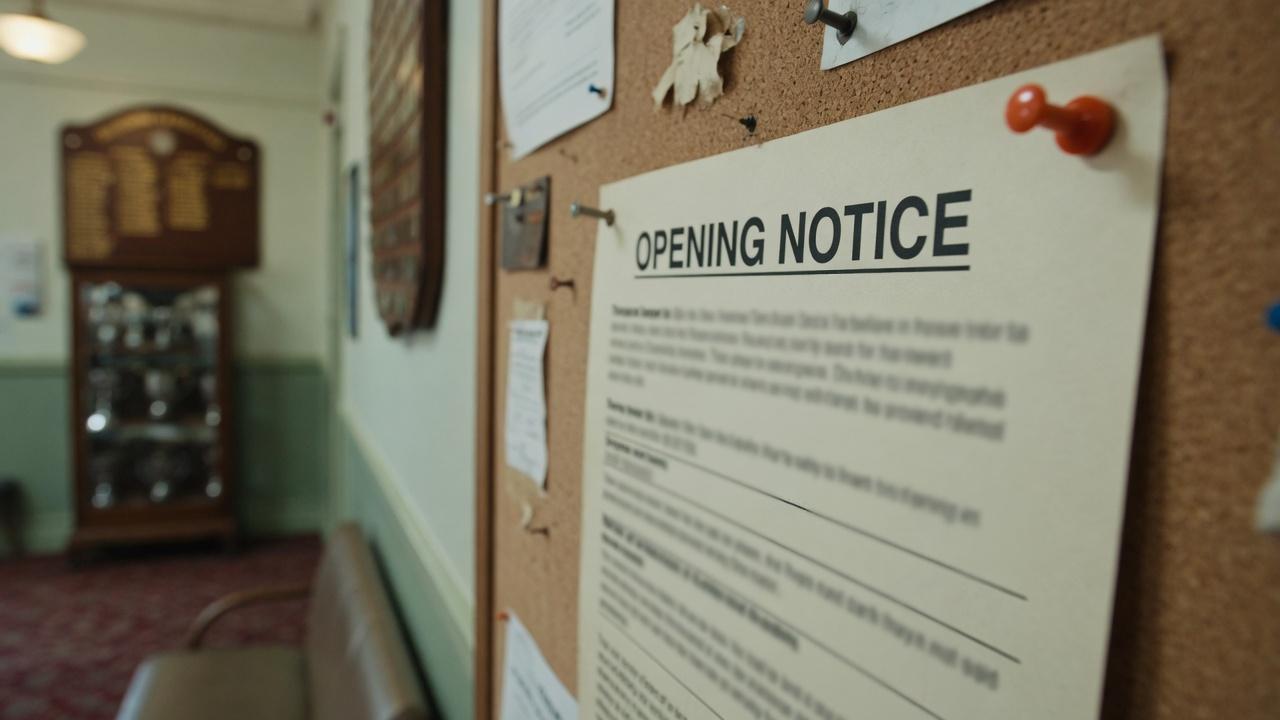
Good governance in an Australian member club is not about ticking boxes for regulators alone. It is the rhythm that lets volunteer boards make sound decisions, protect members' interests, and hand the club to the next generation in better shape than they found it. This guide sets out what that looks like in practice — without drowning you in legalese.
What "good governance" means for member-owned clubs
Member-owned clubs — golf, sailing, tennis, RSL, and community sporting organisations — sit in a distinctive space. Members are owners, customers, and often volunteers at once. Governance must balance democratic legitimacy with operational discipline.
Good governance means decisions are made by the right people, on adequate information, with proper records, and in the interests of the club as a whole. It is visible in how meetings run, how conflicts are managed, and how the board holds management (or volunteer coordinators) to account.
Board vs committee vs management roles
The board sets direction, approves major commitments, and oversees risk and compliance. It does not run day-to-day operations — that is management's role, whether paid staff or volunteer office-holders.
Committees (green, finance, membership, house) carry delegated authority for specific domains. Their terms of reference should be written, and their recommendations to the board should be minuted. Blurred lines between board and committee are a common source of governance failure.
- ·Board: strategy, major expenditure, policy, appointments, AGM business
- ·Committees: specialist advice and operational recommendations within delegated limits
- ·Management / secretary: execution, records, member service, meeting administration
Key documents every club should maintain
A well-run club keeps a single, current library: constitution or rules, policies (including member protection and workplace safety where relevant), registers of office-bearers and conflicts of interest, financial reports, and meeting minutes.
If directors cannot find the latest version of a policy in under a minute, you do not yet have a single source of truth. Version control by email is not a library.
Meeting rhythm: board, committee, AGM
Most Australian clubs settle into a predictable cadence: monthly or bi-monthly board meetings, quarterly committee meetings, and an annual general meeting with a defined notice period.
The AGM is not just a formality — it is the members' primary accountability mechanism. Notice, quorum, motions, elections, and minutes must be defensible. Boards that treat the AGM as an afterthought often discover gaps only when a dispute arises.
Compliance, risk, and member trust
Compliance spans incorporated-association obligations, affiliated-body requirements (where applicable), workplace safety, liquor licensing, and member protection standards. Risk management is not pessimism — it is how clubs avoid the crises that destroy volunteer goodwill.
Members trust clubs that communicate clearly, handle complaints fairly, and show their working on major decisions. Governance records are part of that trust.
Common governance failures in Australian clubs
Versioned PDFs and email threads for board packs. Incomplete conflict-of-interest registers at AGM time. Actions from minutes that never become owned tasks. Secretaries burning out because the club has process in name only.
These failures are rarely malicious. They are what happens when well-intentioned volunteers lack structure. Fixing them is a systems problem, not a personality problem.
Building sustainable habits (not one-off fixes)
Sustainable governance is a rhythm: pack out on time, compliance visible before distribution, minutes approved and locked, actions assigned with due dates, registers updated after each meeting.
Clubs that establish this rhythm in the first 90 days tend to keep it. Clubs that wait for the perfect data migration rarely start.
When to seek legal or accounting advice
ClubCensus and guides like this one support operational governance — they are not a substitute for qualified legal or accounting advice on constitutions, disputes, tax, or complex transactions.
Engage your club's solicitors for rule changes, major property decisions, and member disputes. Engage your accountant for audit, BAS, and financial restructuring. Use your governance platform to keep records organised so advisers spend less time reconstructing history.
FAQ
- Does this apply to incorporated associations and unincorporated clubs?
- Principles are similar, but incorporated associations face specific statutory obligations under their state or territory legislation. Always read your constitution and applicable Act alongside general good practice.
- How does ClubCensus fit in?
- ClubCensus provides meetings, minutes, board packs, compliance scoring, tasks, documents, and member operations in one calm system — with Bill, the ClubCensus Assistant, supporting secretaries on notices and pack preparation. It supports governance; it does not replace your board's judgment.